


 lubin@china-end-mill.com
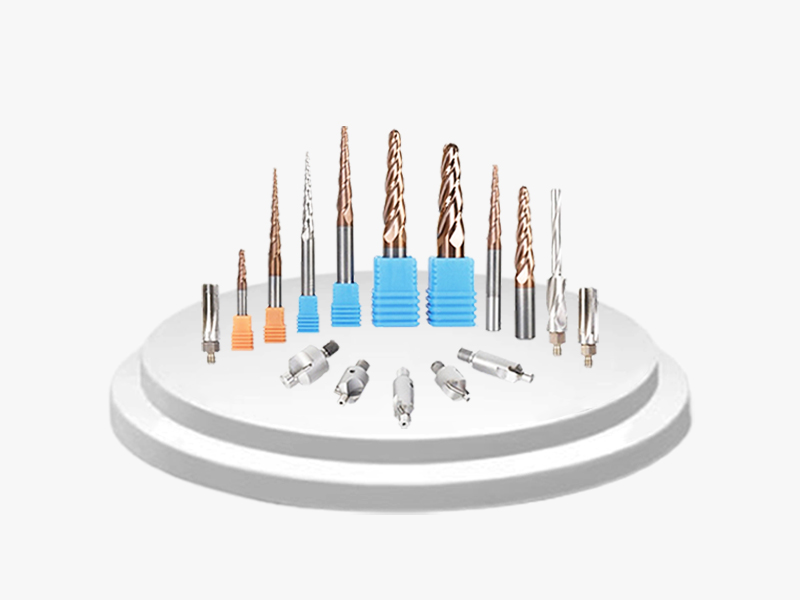


PCD Countersink vs. Carbide Countersink: Which Tool Delivers Better Performance?
 Jan 16, 2026|
 View:658
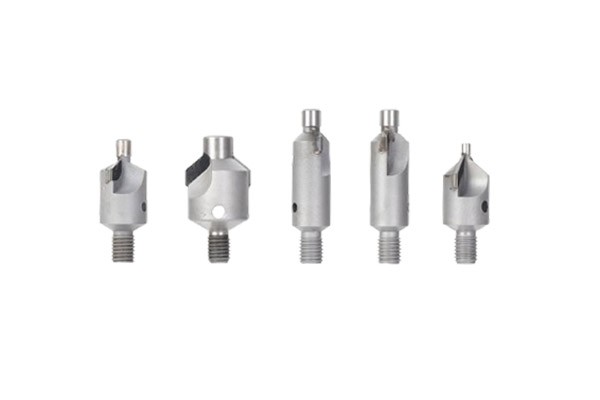
In modern manufacturing, selecting the right countersink drill can significantly impact production efficiency, tool lifespan, and overall cost-effectiveness. While both PCD (Polycrystalline Diamond) and carbide countersinks serve similar functions, their performance characteristics differ dramatically across various applications. This comprehensive guide examines the key differences between these two tool types, helping manufacturers and machinists make informed decisions for their specific machining requirements.
Key Takeaways
Material Hardness:PCD countersink drills offer superior hardness (5000-8000 HV) compared to carbide tools (1400-1800 HV), resulting in exceptional wear resistance
Application Suitability: PCD excels in non-ferrous materials while carbide performs better with ferrous metals and general-purpose applications
Cost vs. Longevity: Though PCD countersinks cost 3-5 times more initially, they can last 10-50 times longer in appropriate applications
Surface Finish Quality: PCD tools consistently produce superior surface finishes with Ra values below 0.4 micrometers
Heat Resistance: Carbide tolerates higher temperatures, making it suitable for steel and cast iron machining
Understanding Material Composition and Properties
What Makes PCD Countersink Drills Unique?
PCD countersink tools feature cutting edges made from synthetic diamond particles bonded together under extreme pressure and temperature. This manufacturing process creates a material that combines diamond's exceptional hardness with practical machinability. The diamond particles, typically ranging from 2 to 30 micrometers, are sintered with a metallic binder (usually cobalt) to form a polycrystalline structure that resists wear far better than conventional tool materials.
The unique crystalline structure of PCD provides remarkable thermal conductivity—approximately 500-1000 W/mK compared to copper's 400 W/mK—which helps dissipate heat during machining operations. This characteristic prevents thermal damage to both the tool and workpiece, maintaining dimensional accuracy throughout extended production runs.
Carbide Countersink Construction
Carbide countersinks are manufactured from tungsten carbide powder mixed with cobalt binder, then compressed and sintered at temperatures exceeding 1400°C. The resulting material offers excellent hardness and strength while maintaining reasonable toughness. Different cobalt percentages create various grades suitable for specific applications—lower cobalt content (3-6%) increases hardness, while higher percentages (10-15%) improve impact resistance.
Modern carbide tools often incorporate specialized coatings such as titanium nitride (TiN), titanium carbonitride (TiCN), or aluminum titanium nitride (AlTiN) to enhance performance. These coatings reduce friction, increase surface hardness by 2000-3000 HV, and improve heat resistance, extending tool life by 200-400% in demanding applications.

Performance Comparison Across Key Metrics
| Performance Factor | PCD Countersink | Carbide Countersink |
|---|---|---|
| Hardness (Vickers) | 5000-8000 HV | 1400-1800 HV |
| Tool Life (Aluminum) | 10-50x longer | Baseline |
| Surface Finish (Ra) | 0.2-0.4 μm | 0.4-0.8 μm |
| Maximum Operating Temp | 700°C | 900-1000°C |
| Cutting Speed Range | 150-500 m/min | 60-200 m/min |
| Initial Cost | 3-5x higher | Standard |
| Best for Ferrous Metals | Not recommended | Excellent |
| Edge Sharpness Retention | Superior | Good |
Material-Specific Applications and Recommendations
When to Choose PCD Countersink Drills
PCD countersinks excel when machining non-ferrous materials and composites. Their exceptional performance becomes most apparent in high-volume production environments where tool changes represent significant downtime costs. Aluminum alloys, particularly those used in aerospace and automotive manufacturing, benefit tremendously from PCD tooling due to the material's abrasive silicon content that quickly wears conventional tools.
For composite materials including carbon fiber reinforced polymers (CFRP) and glass fiber reinforced plastics (GFRP), PCD countersinks provide clean, delamination-free holes essential for structural integrity. According to research published in the Journal of Materials Processing Technology, PCD tools demonstrate significantly reduced delamination factors compared to carbide alternatives when machining composite materials. The automotive industry increasingly relies on PCD tools for electric vehicle battery housings and lightweight structural components where precision and repeatability are critical.
Materials best suited for PCD countersink applications include:
Aluminum alloys (2000, 6000, 7000 series)
Copper and brass alloys
Composite materials (CFRP, GFRP)
Magnesium alloys
Pre-sintered ceramics
Plastics and reinforced polymers
Wood and wood composite materials
Optimal Scenarios for Carbide Countersinks
Carbide countersinks remain the preferred choice for ferrous materials including steel, stainless steel, and cast iron. The chemical affinity between diamond and iron-based materials causes rapid PCD degradation when machining ferrous metals, making carbide the only practical option for these applications. Studies in manufacturing engineering demonstrate that carbide tools show superior performance in interrupted cutting operations common in steel machining.
Job shops and facilities handling diverse material types benefit from carbide's versatility. The lower initial investment makes carbide countersinks economically sensible for low-to-medium production volumes or prototype work where the extended life of PCD cannot be fully utilized. Additionally, carbide tools can handle the thermal shock associated with coolant application better than PCD, providing flexibility in machining strategies.
Carbide countersinks are recommended for:
Carbon and alloy steels
Stainless steel (austenitic and martensitic)
Cast iron and ductile iron
Titanium alloys (with proper parameters)
Nickel-based superalloys
Mixed material production environments
Low-volume or prototype operations
Economic Analysis: Total Cost of Ownership
While PCD countersink drills command premium prices—typically three to five times the cost of equivalent carbide tools—a comprehensive cost analysis reveals significant long-term savings in appropriate applications. The total cost of ownership calculation must consider tool purchase price, tool life, machining time, part quality, and downtime for tool changes.
Break-Even Analysis for High-Volume Production
In aluminum machining operations, PCD countersinks typically reach break-even after processing 3,000 to 10,000 holes, depending on material hardness and machining parameters. For a facility producing 50,000 components annually, the initial investment in PCD tooling can generate cost savings exceeding 50% compared to carbide alternatives when factoring in reduced tool changes, consistent quality, and minimized scrap rates.
A practical example from aerospace component manufacturing demonstrates this principle: A carbide countersink producing 500 acceptable holes before requiring replacement costs approximately $45. A PCD alternative costing $180 produces 15,000 holes under identical conditions. The per-hole cost drops from $0.09 to $0.012—an 87% reduction in tooling expense alone, not accounting for labor savings from fewer tool changes.
Hidden Costs and Productivity Factors
Tool changeover time represents a significant hidden cost in manufacturing operations. Each tool change typically requires 5-15 minutes for inspection, replacement, and verification—time during which expensive machinery sits idle. In three-shift operations, reducing tool changes from weekly to monthly can improve overall equipment effectiveness (OEE) by 2-5%.
Consistent part quality throughout the tool's life cycle reduces inspection requirements and scrap rates. PCD countersinks maintain dimensional accuracy and surface finish specifications from first cut to final operation, while carbide tools experience gradual degradation that may necessitate more frequent quality checks and potential adjustments to machining parameters.
Technical Considerations for Optimal Performance
Cutting Parameters and Speed Optimization
PCD countersink drills permit significantly higher cutting speeds than carbide alternatives—often 2-3 times faster in aluminum applications. This capability stems from superior thermal conductivity that efficiently removes heat from the cutting zone. Recommended cutting speeds for PCD in aluminum range from 150 to 500 meters per minute, while carbide typically operates between 60 and 200 meters per minute.
Feed rates must be adjusted according to material properties and desired surface finish. PCD tools can sustain higher feed rates while maintaining surface quality, with typical ranges of 0.05-0.20 mm per revolution depending on hole diameter and material hardness. The ability to increase both speed and feed simultaneously can reduce cycle times by 30-60% in high-volume production.
Coolant and Lubrication Requirements
Proper coolant application extends tool life and improves surface finish for both PCD and carbide countersinks. However, their requirements differ significantly. PCD's thermal conductivity allows effective dry machining or minimum quantity lubrication (MQL) in many applications, reducing coolant costs and environmental impact. Research from the Journal of Cleaner Production shows that MQL systems can reduce coolant consumption by 95% compared to flood cooling while maintaining comparable tool life.
Carbide countersinks generally benefit from flood coolant application, particularly when machining steel or other ferrous materials. The coolant serves multiple functions: temperature control, chip evacuation, and lubrication. Water-soluble coolants with concentrations of 5-10% work well for most applications, though specialty synthetics may be required for difficult materials like titanium or nickel alloys.
Quality and Precision Outcomes
Surface Finish Characteristics
Surface finish quality directly impacts component functionality, particularly in applications requiring good sealing, fatigue resistance, or corrosion protection. PCD countersinks consistently deliver superior surface finishes with roughness averages (Ra) typically below 0.4 micrometers, compared to 0.4-0.8 micrometers for carbide tools in similar applications.
This difference becomes critically important in aerospace and medical device manufacturing where surface specifications are tightly controlled. The mirror-like finish produced by PCD tools reduces stress concentration points that could initiate crack propagation, thereby improving component longevity and reliability.
Dimensional Accuracy and Repeatability
Maintaining tight tolerances throughout production runs challenges many manufacturing operations. PCD countersink drills excel in this regard due to minimal wear characteristics. Dimensional variations typically remain within ±0.01 mm across tens of thousands of holes, while carbide tools may experience drift of ±0.02-0.04 mm as cutting edges wear.
For industries like automotive and electronics where assembly automation depends on consistent hole geometry, this repeatability translates to fewer assembly issues, reduced rejection rates, and improved overall product quality. Statistical process control becomes more straightforward with PCD tooling as process variation decreases substantially.
Maintenance and Tool Life Management
Inspection and Monitoring Protocols
Implementing proper inspection routines maximizes tool life and prevents quality issues. For carbide countersinks, visual inspection should occur every 100-200 holes initially, with intervals adjusted based on observed wear patterns. Signs of excessive wear include chipping, built-up edge formation, and diameter changes exceeding specification tolerances.
PCD countersinks require less frequent inspection due to extended life spans. Initial verification after 1,000-2,000 holes establishes baseline performance, with subsequent checks every 5,000-10,000 holes typically sufficient. Advanced facilities employ automated inspection systems using machine vision to detect wear without manual intervention, further improving efficiency.
Reconditioning and Resharpening Options
Both PCD and carbide countersinks can be reconditioned to extend useful life, though processes differ. Carbide tools are routinely resharpened multiple times—typically 3-5 cycles depending on original geometry and wear patterns. Each resharpening removes 0.1-0.3 mm of material, restoring cutting edge sharpness at 15-25% of new tool cost.
PCD countersink resharpening requires specialized equipment and expertise due to diamond's extreme hardness. The process uses diamond grinding wheels and must be performed by experienced technicians to maintain precise geometry. While more expensive than carbide resharpening, PCD tools can undergo 4-8 reconditioning cycles, with each restoration costing approximately 30-40% of new tool price but extending life by thousands of additional holes.
Environmental and Safety Considerations
Sustainability concerns increasingly influence manufacturing decisions. PCD countersinks support environmental goals through several mechanisms: reduced material consumption due to extended life, decreased coolant usage through dry or MQL machining compatibility, and lower energy consumption from higher cutting speeds that reduce machine operating time per part.
The longer replacement cycle for PCD tools also reduces packaging waste and transportation-related emissions. Industry studies on sustainable manufacturing practices indicate that extending tool life can reduce the carbon footprint of machining operations by 25-40% per component produced, particularly when combined with reduced coolant consumption.
Safety profiles for both tool types are generally excellent when used properly. Neither PCD nor carbide countersinks present unique hazards beyond standard machine tool safety protocols. However, PCD's ability to operate effectively with reduced coolant minimizes worker exposure to cutting fluid mists, potentially improving air quality in manufacturing environments and reducing health risks associated with prolonged coolant exposure.
Summary and Decision Framework
Choosing between PCD and carbide countersinks requires careful analysis of material types, production volumes, quality requirements, and budget constraints. PCD countersink drills represent the optimal solution for high-volume production of non-ferrous materials where exceptional tool life, superior surface finish, and dimensional consistency justify premium pricing. Industries including aerospace, automotive, and electronics manufacturing realize substantial total cost savings despite higher initial investment.
Carbide countersinks remain indispensable for ferrous material machining and offer excellent versatility for mixed-material operations. Their lower cost, ability to handle thermal shock, and compatibility with diverse materials make them ideal for job shops, prototype development, and facilities with moderate production volumes. Understanding these distinctions enables manufacturers to optimize tooling strategies for improved productivity, quality, and profitability.
Frequently Asked Questions
Can PCD countersinks be used on steel materials?
No, PCD countersinks should not be used on ferrous materials including steel, stainless steel, or cast iron. The carbon in diamond reacts chemically with iron at cutting temperatures, causing rapid tool degradation. Carbide countersinks are the appropriate choice for all ferrous metal applications.
How many holes can a PCD countersink drill produce before replacement?
In aluminum applications, PCD countersinks typically produce 10,000 to 50,000 holes depending on material hardness, machining parameters, and hole specifications. This represents 10-50 times the life of comparable carbide tools. Actual life varies with application specifics and should be monitored during initial implementation.
What is the cost difference between PCD and carbide countersinks?
PCD countersinks cost approximately 3-5 times more than carbide alternatives initially. However, the cost per hole is significantly lower for PCD in suitable applications due to extended tool life. Break-even typically occurs after 3,000-10,000 holes in high-volume aluminum machining operations.
Do PCD countersinks require special machine tools or equipment?
No, PCD countersinks work with standard CNC machines and drilling equipment. They require no special fixturing or machine modifications. However, machines should have adequate rigidity and spindle speed capability to realize PCD's full performance potential, particularly for high-speed operations.
Which countersink type provides better surface finish?
PCD countersinks deliver superior surface finish with Ra values typically below 0.4 micrometers, compared to 0.4-0.8 micrometers for carbide tools. The exceptionally sharp and stable cutting edges of PCD maintain this quality throughout the tool's extended life, ensuring consistent results across production runs.
Can both tool types be resharpened to extend their life?
Yes, both PCD and carbide countersinks can be resharpened. Carbide tools undergo 3-5 resharpening cycles at 15-25% of new tool cost. PCD resharpening requires specialized diamond grinding equipment and costs 30-40% of new tool price, but tools can be reconditioned 4-8 times, making it economically viable for high-value applications.
What coolant requirements apply to each tool type?
PCD countersinks often perform well with dry machining or minimum quantity lubrication due to excellent thermal conductivity, reducing coolant costs and environmental impact. Carbide countersinks typically require flood coolant, especially for ferrous materials, to control temperature and evacuate chips effectively.