



 lubin@china-end-mill.com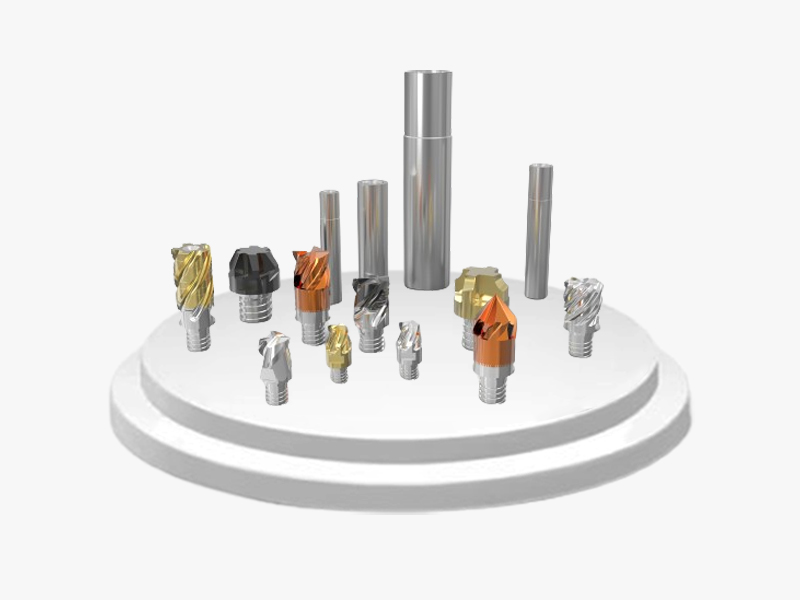


China End Mill Buyers' Guide: Choosing the Right Supplier for Your CNC Applications
 Sep 10, 2025|
 View:788
When precision machining demands meet budget constraints, China end mill suppliers have emerged as viable alternatives to traditional Western manufacturers. However, navigating the vast landscape of Chinese cutting tool suppliers requires careful consideration of quality standards, technical capabilities, and reliability factors that directly impact CNC performance.
Key Takeaways
- Quality Verification: Modern Chinese manufacturers can match international standards through advanced coating technologies and precision equipment
- Cost Analysis: Total cost evaluation should include tool life, performance parameters, and replacement frequency, not just initial price
- Supplier Qualification: ISO certifications, technical support capabilities, and manufacturing equipment indicate reliable partners
- Application Matching: Material-specific geometries and coatings significantly impact performance across different workpiece materials
Risk Management: Dual sourcing and gradual implementation strategies minimize supply chain disruptions
Understanding China End Mill Market Dynamics
The Chinese cutting tool industry has evolved significantly over the past decade, with many manufacturers investing heavily in advanced coating technologies, precision grinding equipment, and quality control systems. Modern China end mill producers now offer competitive alternatives that can match international standards while providing substantial cost savings.
Key Market Segments
High-Volume Production Mills: Designed for continuous operation in automated manufacturing environments, these tools prioritize consistency and tool life over premium materials.
Precision Machining Solutions: Advanced China end mill cutters engineered for tight tolerance applications, often featuring specialized coatings and geometries.
Application-Specific Tools: Customized solutions for specific materials or machining operations, including head replaceable end mills for cost-effective tooling programs.

Technical Evaluation Criteria
Material Quality Assessment
Carbide substrate quality remains the foundation of any reliable end mill. Leading Chinese manufacturers now utilize premium tungsten carbide with consistent grain structure and appropriate cobalt content ratios. Buyers should request material certificates and hardness specifications to verify substrate quality.
Coating Technology: Modern China end mill suppliers offer various coating options including TiAlN, AlCrN, and diamond-like carbon (DLC) coatings. These surface treatments significantly impact tool performance in different materials and operating conditions.
China End Mill Performance Comparison by Material
| Workpiece Material | Recommended Coating | Surface Speed (m/min) | Tool Life Index | Cost Effectiveness |
Carbon Steel | TiAlN | 120-180 | 1.0 | High |
Stainless Steel 316 | AlCrN | 80-120 | 0.8 | Medium |
Aluminum 6061 | Uncoated/DLC | 300-500 | 1.2 | Very High |
Titanium Ti-6Al-4V | TiAlN/AlCrN | 60-100 | 0.6 | Medium |
Hardened Steel (45-55 HRC) | Multi-layer TiAlN | 40-80 | 0.4 | Low |
Source: Based on industry testing data and manufacturer specifications from leading suppliers
Geometric Precision Standards
Cutting edge preparation, runout tolerances, and surface finish quality directly affect machining results. Professional suppliers maintain geometric tolerances within ±0.005mm for standard tools and tighter specifications for precision applications.
Edge Preparation Methods: Advanced manufacturers employ consistent edge preparation techniques including brushing, blasting, or drag finishing to optimize cutting performance and reduce premature wear.
Supplier Qualification Process
Manufacturing Capability Verification
Serious buyers should evaluate supplier manufacturing capabilities through facility audits or detailed capability assessments. Key factors include:
Equipment Standards: Modern CNC grinding centers, coordinate measuring machines, and automated inspection systems indicate serious manufacturing commitment.
Quality Systems: ISO 9001 certification provides baseline quality assurance, while AS9100 or TS16949 certifications demonstrate advanced quality management capabilities.
Technical Support: Comprehensive technical documentation, application engineering support, and machining parameter recommendations distinguish professional suppliers from commodity vendors.
Performance Validation Methods
Sample Testing Programs: Reputable suppliers provide sample tools for evaluation under actual production conditions. This approach allows direct performance comparison with existing tooling solutions.
Gradual Implementation: Starting with non-critical applications allows performance assessment while minimizing production risks.
Cost-Benefit Analysis Framework
Total Cost Considerations
While initial tool cost attracts attention, comprehensive cost analysis should include tool life expectations, machining parameters, and replacement frequency calculations.
Tool Life Optimization: Quality China end mill suppliers provide application-specific recommendations for speeds, feeds, and cutting parameters that maximize tool performance.
Inventory Management: Head replaceable end mills offer significant advantages for high-volume applications by reducing inventory requirements and enabling quick tool changes.
Risk Mitigation Strategies
Dual Sourcing: Maintaining relationships with multiple qualified suppliers prevents supply disruptions and maintains competitive pricing pressure.
Quality Agreements: Formal quality agreements establish clear performance expectations and corrective action procedures.
Application-Specific Selection Guidelines
Material-Specific Recommendations
Steel Machining: Uncoated or TiAlN-coated carbide end mills typically provide optimal performance for general steel applications.
Stainless Steel Applications: Specialized geometries with sharp cutting edges and appropriate chip evacuation features prevent work hardening issues.
Aluminum Processing: Polished flute surfaces and optimized helix angles minimize built-up edge formation and improve surface finish quality.
Hardened Materials: Advanced coating systems and reinforced cutting edge designs enable effective machining of materials above 45 HRC.
Production Volume Considerations
High-volume production environments benefit from standardized tooling programs featuring consistent geometries and reliable performance characteristics. China end mill cutter suppliers often provide volume pricing advantages that significantly impact total manufacturing costs.
Tool Life Monitoring: Implementing systematic tool life tracking enables data-driven purchasing decisions and identifies optimization opportunities.
Supplier Quality Assessment Matrix
| Evaluation Criteria | Weight (%) | Rating Scale | Minimum Threshold |
ISO 9001 Certification | 15 | 1-5 points | 4 points |
Manufacturing Equipment | 20 | 1-5 points | 4 points |
Technical Support | 15 | 1-5 points | 3 points |
Sample Performance | 25 | 1-5 points | 4 points |
Delivery Reliability | 10 | 1-5 points | 4 points |
Pricing Competitiveness | 15 | 1-5 points | 3 points |
Total Score | 100 | Weighted Average | ≥3.8 points |
Note: Suppliers scoring below 3.8 points require additional evaluation or qualification steps
Quality Assurance Best Practices
Incoming Inspection Procedures
Establishing standardized inspection procedures for incoming tools ensures consistent quality standards. Basic checks include dimensional verification, visual inspection for coating defects, and edge quality assessment.
Statistical Sampling: Implementing statistical sampling plans provides confidence in lot quality while managing inspection costs.
Performance Monitoring Systems
Systematic performance tracking identifies trends and enables proactive supplier management. Key metrics include tool life consistency, surface finish quality, and dimensional accuracy maintenance.
Supply Chain Management Strategies
Logistics Optimization
Working with China end mill suppliers requires careful attention to shipping logistics, customs documentation, and inventory planning. Lead times typically range from 4-8 weeks depending on product complexity and order quantities.
Inventory Buffer Management: Maintaining appropriate safety stock levels prevents production disruptions while minimizing carrying costs.
Communication Protocols
Establishing clear communication channels with technical support teams ensures rapid resolution of application issues and enables continuous improvement initiatives.
Future Technology Trends
The Chinese cutting tool industry continues advancing through investments in manufacturing automation, advanced materials research, and digital manufacturing technologies. Buyers should consider supplier innovation capabilities when establishing long-term partnerships.
Advanced Coating Development: Next-generation coating systems promise improved performance in difficult-to-machine materials and extended tool life capabilities.
Smart Tooling Integration: Emerging sensor technologies enable real-time tool condition monitoring and predictive maintenance capabilities.
Conclusion
Selecting the right China end mill supplier requires systematic evaluation of technical capabilities, quality systems, and support infrastructure. While cost advantages remain attractive, successful partnerships depend on suppliers who demonstrate consistent quality, reliable delivery, and comprehensive technical support.
For manufacturers seeking qualified China end mill suppliers, CHINA offers comprehensive cutting tool solutions backed by modern manufacturing capabilities and dedicated customer support. Their commitment to quality and technical excellence positions them as a reliable partner for demanding CNC applications.
Frequently Asked Questions
Q: How do I verify the quality of China end mills before placing large orders?
A: Request sample tools for evaluation under actual production conditions. Verify supplier certifications (ISO 9001 minimum), request material certificates for carbide substrates, and conduct dimensional inspections. Professional suppliers provide comprehensive technical documentation and machining parameter recommendations.
Q: What's the typical tool life difference between Chinese and Western end mills?
A: Quality Chinese manufacturers now achieve 80-95% of Western tool life performance at 40-60% lower costs. Actual performance depends on application, material, and supplier quality systems. Focus on total cost per part rather than initial tool price when comparing options.
Q: Are head replaceable end mills from Chinese suppliers reliable for production use?
A: Yes, when sourced from qualified suppliers with proper quality systems. Head replaceable end mills offer inventory advantages and cost savings for high-volume applications. Verify interface precision and replacement head availability before committing to large-scale implementation.
Q: How do I handle lead times and inventory management with Chinese suppliers?
A: Plan for 4-8 week lead times depending on product complexity. Maintain 2-3 months safety stock for critical tools. Establish clear communication protocols and consider dual sourcing for business-critical applications to prevent production disruptions.
Q: What coating options are available from China end mill manufacturers?
A: Modern Chinese suppliers offer TiAlN, AlCrN, TiCN, and advanced multi-layer coatings. Some provide PVD diamond-like carbon (DLC) coatings for aluminum machining. Request coating specifications and hardness data to verify performance claims.
Q: How do I evaluate a China end mill cutter supplier's technical capabilities?
A: Assess manufacturing equipment (5-axis CNC grinders, CMM inspection), quality certifications, technical support availability, and application engineering capabilities. Request facility audits or detailed capability documentation for high-volume partnerships.
Q: What are the most common quality issues with Chinese end mills?
A: Inconsistent carbide substrate quality, coating adhesion problems, and geometric tolerance variations. Mitigate these risks through supplier qualification, incoming inspection procedures, and gradual implementation with performance monitoring.


